Q5 Site-Directed Mutagenesis
Site-Directed Mutagenesis: A Comprehensive Guide
Introduction
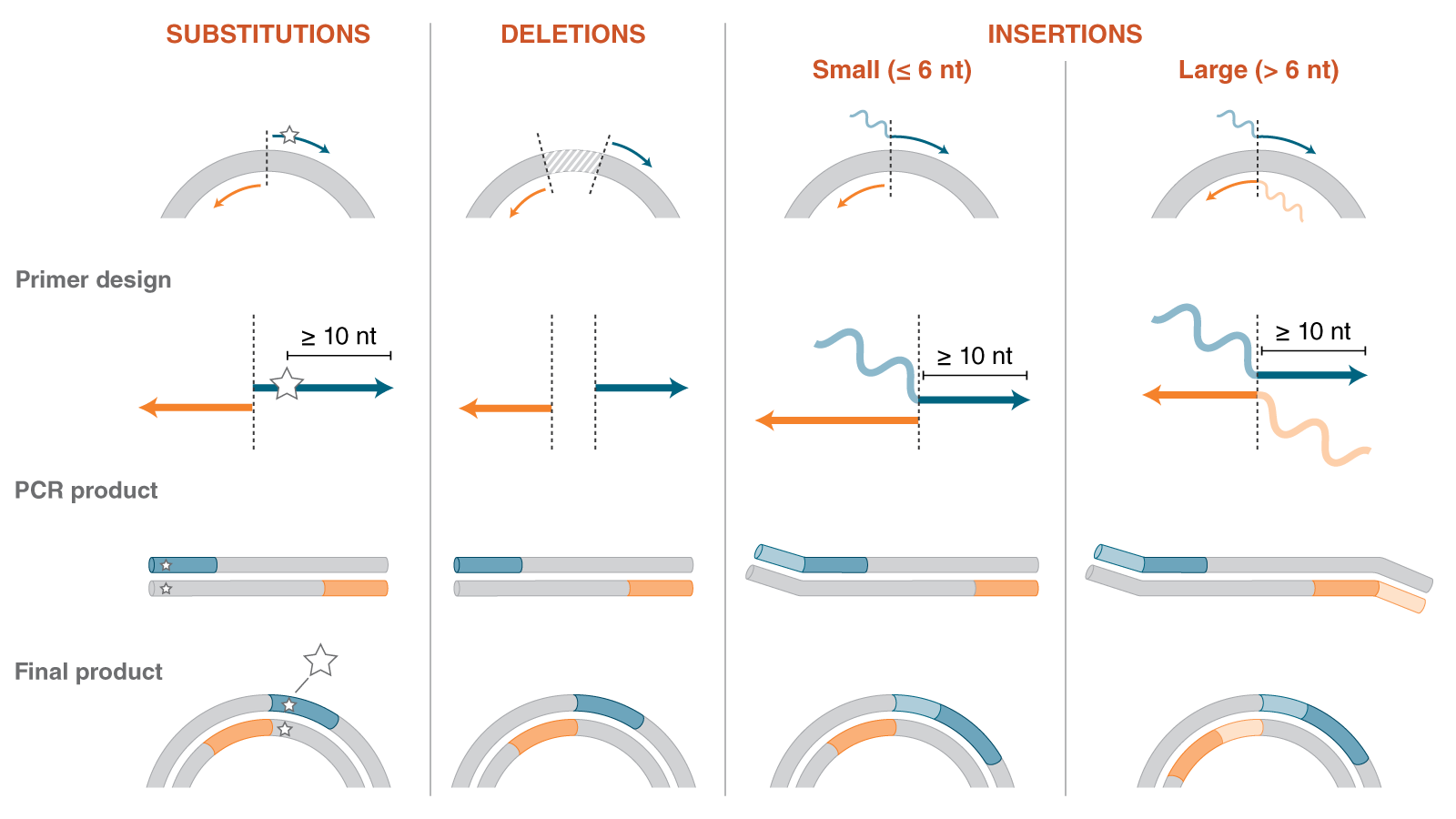
Site-directed mutagenesis (SDM) is a powerful technique in molecular biology that allows researchers to introduce specific nucleotide changes into a DNA sequence. This method is instrumental in studying gene function, protein structure, and enzyme activity.
Understanding Site-Directed Mutagenesis
At its core, site-directed mutagenesis involves the intentional modification of a specific DNA sequence to alter the amino acid sequence of the encoded protein. This targeted approach contrasts with random mutagenesis, providing a controlled means to study the effects of specific mutations.
Applications
- Protein Engineering: Modify enzymes for better stability, activity, or specificity.
- Functional Genomics: Study gene function through mutation.
- Disease Modeling: Replicate mutations found in diseases.
- Drug Development: Understand targets by mutating protein interaction sites.
The Q5 Site-Directed Mutagenesis Kit
The Q5 Site-Directed Mutagenesis Kit by NEB is engineered for precise insertion, deletion, and substitution mutations in plasmid DNA.
Key Features
- High-Fidelity Amplification with Q5 Hot Start High-Fidelity DNA Polymerase.
- Efficient KLD workflow (Kinase, Ligase, DpnI mix).
- Versatile mutation types: substitutions, insertions, deletions.
Primer Design for Site-Directed Mutagenesis
Well-designed primers are critical. Consider length, Tm, GC content, mutation positioning, and absence of secondary structures.
Primer Design Guidelines
- Length: 25–45 nt
- Tm: ~78°C
- GC content: 40–60%
- Mutation position: Center of primer
Tools
Protocol Overview
- Design primers with appropriate tools
- Perform PCR using Q5 polymerase
- KLD treatment to circularize and remove parental DNA
- Transform competent cells
- Screen for mutants via sequencing or colony PCR
Tips for Success
- Use high-purity template DNA
- Purify primers using HPLC
- Optimize PCR conditions
- Ensure full DpnI digestion
Conclusion
Site-directed mutagenesis is indispensable in modern molecular biology. With the Q5 SDM Kit and proper primer design, researchers can achieve efficient and accurate mutations for a wide range of applications.


