Optimal Vector-to-Insert Ratios for Efficient DNA Ligation in Molecular Cloning Workflows
Optimal Vector and Insert Amounts for a Successful Ligation Reaction in Cloning Workflows
Cloning is a fundamental technique in molecular biology, and getting the ligation reaction right is crucial for success. One of the most common questions researchers ask is:
"How much vector and insert should I use in my ligation reaction?"
The answer depends on several factors, including the size of your DNA fragments, the vector-to-insert ratio, and the ligation efficiency. In this guide, we'll break down the standard recommendations and provide a step-by-step approach to optimizing your cloning workflow.
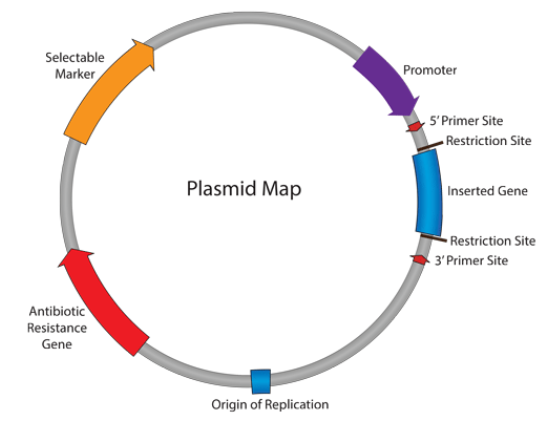
Why Molar Ratios Matter More Than Mass in Ligation Reactions
When setting up a ligation, many beginners make the mistake of focusing solely on the mass (ng) of DNA rather than the number of molecules (fmoles/pmoles). Here's why that's a problem:
- A 3 kb vector at 50 ng contains the same number of molecules as a 6 kb vector at 100 ng (both are ~27 fmoles).
- If you only measure by mass, you might end up with too few vector molecules for efficient ligation.
This is why we recommend calculating based on molar ratios rather than mass.
How to Calculate Vector and Insert Amounts
The general formula to convert ng to fmoles is:
fmoles = (ng × 1000) / (DNA length (bp) × 660)
But instead of doing this manually, you can use the NEBioCalculator, which simplifies the process.
Standard Recommendations for Vector and Insert Amounts
1. Vector Amount: Starting Point for Ligation
For a typical 3 kb vector, we recommend:
- 50 ng of vector DNA (~27 fmoles).
If your vector is larger (e.g., 6 kb), you'll need 100 ng to maintain the same molarity.
2. Insert Amount: Adjusting Based on Size
The vector-to-insert ratio depends on the size difference between the two fragments:
| Insert Size vs. Vector | Recommended Ratio (Vector:Insert) |
|---|---|
| Similar size (e.g., 3 kb vector + 3 kb insert) | 1:1 |
| Insert is 3x smaller (e.g., 3 kb vector + 1 kb insert) | 1:3 |
| Very small insert (<100 bp) | 1:10 to 1:20 |
Example Calculation:
- Vector: 3 kb, 50 ng (~27 fmoles).
- Insert: 1 kb, target ratio 1:3.
- Required insert = 81 fmoles (or ~50 ng).
Optimizing Ligation Efficiency: Key Considerations
1. Why Smaller Inserts Need Higher Ratios
- Short DNA fragments have fewer sticky ends, making them harder to ligate.
- Increasing the insert ratio (1:10 or 1:20) compensates for this.
2. Testing Multiple Ratios Improves Success
Since ligation efficiency varies, it's wise to test:
- 1:1, 1:3, and 1:5 ratios for standard inserts.
- 1:10 or 1:20 for very small inserts (<50 bp).
3. Avoiding Common Ligation Mistakes
- Too much DNA can inhibit ligase.
- Incorrect buffer conditions (e.g., wrong ATP concentration).
- Poorly purified DNA (PCR leftovers can interfere).
Step-by-Step Ligation Protocol
1. Calculate Required DNA Amounts
Use the NEBioCalculator to determine:
- Vector fmoles (e.g., 27 fmoles for 3 kb vector).
- Insert fmoles (based on your chosen ratio).
2. Set Up the Reaction
A standard 20 µL ligation reaction might include:
| Component | Amount |
|---|---|
| Vector DNA | 50 ng |
| Insert DNA | 50 ng (for 1:3 ratio) |
| T4 DNA Ligase | 1 µL |
| Ligase Buffer | 2 µL |
| Nuclease-free Water | Up to 20 µL |
3. Incubate and Transform
- Room temperature (25°C) for 10-30 min (quick ligation).
- 16°C overnight (higher efficiency for difficult clones).
Troubleshooting Ligation Failures
1. No Colonies After Transformation?
- Check DNA purity (gel extraction vs. PCR cleanup).
- Test ligase activity (use a control plasmid).
- Verify competent cell efficiency.
2. Too Many False Positives?
- Increase vector dephosphorylation (if using CIP-treated DNA).
- Optimize insert-to-vector ratio (too much insert can cause concatemers).
Final Thoughts: Best Practices for Reliable Cloning
- Always use molar ratios, not just mass.
- Test multiple ligation ratios for tricky clones.
- Purify DNA properly (avoid leftover enzymes or salts).
- Use a ligation calculator (like NEBioCalculator) for accuracy.
By following these guidelines, you'll maximize cloning efficiency and reduce frustration in your molecular cloning experiments.


